



Simeon Shodimu

The agricultural value chain is crucial for Nigeria’s economic growth and development, offering benefits like increased food security, job creation, and poverty reduction. It can contribute significantly to GDP, improve farmers’ income, and stimulate industrial development. However, challenges like infrastructure gaps, limited finance access, and inefficient supply chains hinder its potential.
Addressing these issues can unlock benefits, making the value chain a key driver of economic diversification and growth.
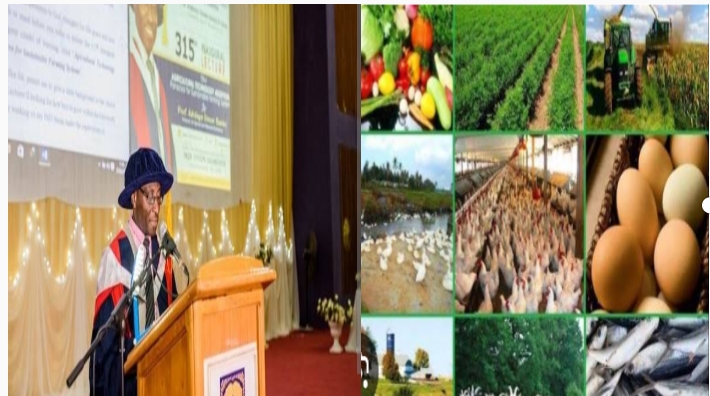
To this end, Vice-Chancellor, Obafemi Awolowo University (OAU), Professor Simeon Bamire, has posited that value chain development is crucial to food security, stressing that production alone is insufficient.
Professor Bamire stated this in his welcome address at the 37th annual South-West Research Extension Farmers Input Linkage System (REFILS) workshop, organised by the Institute of Agricultural Research And Training (IAR&T), Obafemi Awolowo University, Moor Plantation, Ibadan.
He stated that the theme for this year’s workshop: “Transforming Agriculture through Innovation, Climate Resilience and Value Chain Development for Food Security” as both timely and strategic.
He said: “Across Nigeria and indeed the African continent, agriculture stands at a defining crossroads. Climate variability, population growth, market volatility, and evolving consumer demands are challenging our traditional systems. Yet, within these challenges lie immense opportunities.”
The VC stated further: “Value chain development is indispensable to achieving food security. We must strengthen processing, storage, marketing, logistics and agribusiness financing.
“By reducing post-harvest losses, adding value to primary produce, and creating market linkages, we empower farmers economically while ensuring stable food supplies.
REFILS has historically served as a vital platform for harmonising research findings, refining extension messages, and strengthening partnerships among research institutes, universities, and field practitioners.”
While welcoming participants, Director, IAR&T, Professor Gabriel Oluwatosin, noted that agricultural transformation requires partnerships, stating: “IAR&T stands ready to deepen collaboration with international development agencies, private sector investors, NGOs and donor-funded programme, financial institutions and farmer organisations
“We offer research infrastructure and experimental fields, technical expertise for project design and implementation, monitoring and evaluation support, capacity-building platforms and policy-informed research outputs. Our doors remain open for collaborative projects that promote innovation, enhance resilience, and scale impact across farming communities.”
Professor Oluwatosin advocated that resolutions from the workshop should inform policymakers at the state and federal levels, contributing to evidence-based agricultural policies.
Speaking also at the event, the governor of Ondo State, Mr Lucky Aiyedatiwa, called on government at all levels to support farmers by providing mechanised technologies to boost food security in the country.
Governor Aiyedatiwa, who was represented by the State Commissioner for Agriculture, Honourable Olalekan Emmanuel Akinola, noted that government should ensure that grants are allocated to real farmers, instead of political farmers, which according to him could be a threat to food security in the country.
He also called on researchers to ensure the results of their research get to the farmers and are not limited to the shelf only for academic purposes so that farmers can be able to implement the outcome for optimum food production.
He emphasised that if farming and technology could work together, there will be food security in Nigeria.
In his remarks at the event, a former governor of Ondo State, Dr. Olusegun Mimiko, called for synergy between the government and the farmers so as to ensure that some of the products of the farms do not rot.
He however specifically advocated a price mechanism because according to him, the farmers become the losers at the end when they have no one to buy their goods after investing a lot of money into the production.