
By Lanre Shodimu

Farmlife Media, in continuation of its “Farmlife’s 100 Renowned Agropreneurs in Nigeria” series, is spotlighting innovative Nigerians who are making meaningful contributions to agriculture, livestock production and food security.
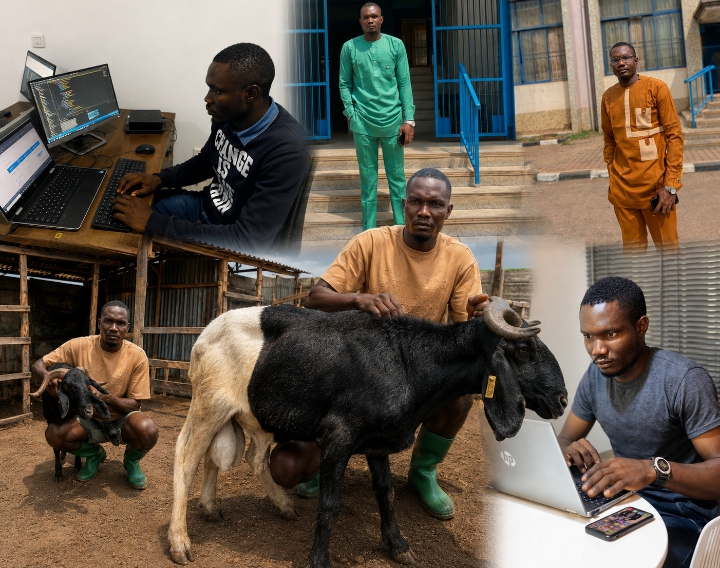
Among those making a remarkable transition into agriculture is Orutu Akposieyefa Williams, CEO of Akposieyefa Harvest Farms & Nature Reserve, a software engineer who has ventured into livestock farming with a vision to improve the genetics of local animal breeds while exploring new opportunities in sustainable animal husbandry.
Williams represents a growing generation of Nigerian professionals who are combining their expertise in other fields with agriculture, demonstrating that farming can be both a viable business and a platform for innovation.From Software Engineering to Livestock Farming.
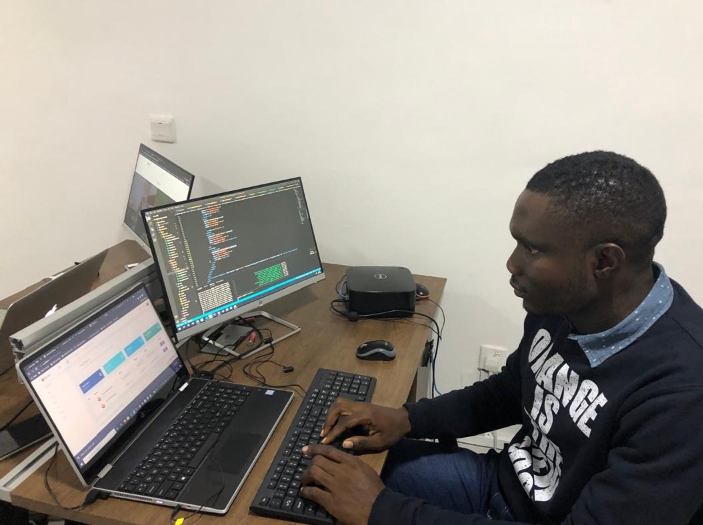
Although trained and professionally engaged as a software engineer, Williams says his interest in agriculture dates back to his early years. According to him, when he was seeking admission into higher institution, his original ambition was to study Animal Science.
However, due to admission challenges, he eventually studied Computer Science at a polytechnic. He subsequently spent about five to six years working as a software engineer and continues to practise in the profession today.
But his long-standing passion for agriculture eventually drew him into livestock farming.“I’ve been a lover of farming. When I wanted to gain admission, I wanted to study Animal Science.
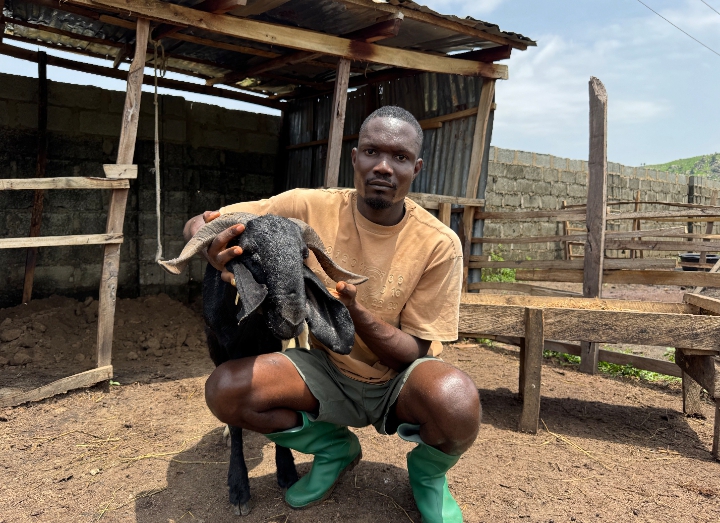
But due to lack of admission, I went to a polytechnic and studied Computer Science,” he explained.
His decision to combine both professions has given him a unique perspective on agriculture. For Wiiliams, farming is not necessarily a departure from technology but an opportunity to bring the two worlds together.
His approach is built around blending technology with farming, using his professional experience and entrepreneurial mindset to develop a livestock enterprise with long-term ambitions.Building a Farm Around Better Genetics..

At the heart of Wiiliams’ livestock operation is a clear objective: improving the genetics of local breeds of animals.Rather than focusing solely on raising animals for immediate sales, the farm is primarily positioned around breeding and genetic improvement.
He explained that the farm began on September 11, 2025, when he brought his first cow to the farm.From that modest beginning with just one cow, the operation has grown significantly.
The farm now has approximately 24 cattle, alongside goats and rams.The expansion, he says, reflects the potential he sees in livestock agriculture and his determination to gradually build a productive animal husbandry enterprise.

The farm has also invested in breeding bulls and female animals, with plans to progressively improve the quality of the herd.Some animals initially acquired for the farm did not meet the desired breeding characteristics. As part of the farm’s strategy, those animals will gradually be sold and replaced with more suitable females and breeding stock.
This selective approach underscores the farm’s long-term focus on building a stronger and more productive herd.Feeding the Animals with Crop Residues.
One of the notable aspects of Williams’ approach to livestock production is his use of agricultural residues as part of the animals’ feed.According to him, the farm feeds its animals with crop residues sourced from farmers within the surrounding community.
The practice provides an opportunity to turn what could otherwise become agricultural waste into useful livestock feed while creating an additional market for farmers who produce the residues.The farm purchases some of these materials from nearby farmers, allows them to dry properly and stores them for subsequent use.
This approach demonstrates how livestock production can be connected to crop farming in a more circular agricultural system—where residues from one agricultural activity can become useful inputs for another.Beyond Cattle:
Exploring Integrated Agriculture Akwes’ ambitions extend beyond cattle breeding.He is also looking at opportunities to integrate crop production into the farm’s activities, including plans to establish a plantain plantation.The farm has already begun experimenting with banana plants as a pilot project.
Another interesting component of the farm’s approach is its management of animal waste. Rather than treating manure simply as waste, Wiiliams intends to utilise it as an organic fertiliser for the planned plantain plantation.
This integrated approach could help the farm reduce waste, improve soil fertility and create additional agricultural outputs.It also demonstrates the potential for livestock and crop production to complement each other within a single farming system.Feeding and Daily Farm Management.
The farm operates a structured feeding routine for its animals.According to Wiiliams, feed is prepared and mixed in advance, with the farm preparing the feed required for the week.The animals are then fed several times a day, including in the morning, afternoon and evening.
This routine is supported by farm workers who are responsible for the daily management and care of the animals.For Williams, effective labour remains an important part of running a livestock enterprise.
The Challenge of Labour like many livestock farmers, Williams has encountered challenges in managing his farm.One of the major difficulties he identified, apart from the cost of feeding animals, is access to reliable farm workers.Livestock farming requires consistent daily attention, and the animals cannot simply be left unattended.
Finding dependable workers who understand the demands of animal husbandry can therefore be challenging.However, he noted that he currently has a reliable worker and has not experienced the same level of labour difficulty in recent months.
The experience highlights one of the broader challenges confronting Nigeria’s agricultural sector: building a reliable and skilled workforce capable of supporting modern farming enterprises.
A Fully Self-Funded Enterprise Despite the growth recorded on the farm, Williams says the enterprise has so far been developed largely through personal resources.He disclosed that the farm has not benefited from government funding or other significant government interventions.“Everything we are doing is self-funded,” he said.While self-funding has enabled him to maintain control over the development of the farm, he believes access to external financial support would significantly accelerate his plans.Seeking Support to Scale one of Williams’ major requests is for access to grants and funding opportunities that can help him scale the enterprise.
He explained that the farm has several projects it hopes to undertake, particularly in the areas of genetic improvement and milk production.Beyond breeding, the farm is interested in exploring the milk-producing potential of local breeds of cattle.However, he acknowledged that developing these areas requires substantial capital.According to him, carrying out such projects entirely from personal resources is expensive and limits the speed at which the farm can expand.
He is therefore seeking funding support that will enable him to increase the size and productivity of the farm while developing additional components of the enterprise.Harnessing Technology for Agriculture Williams’ story is particularly significant because it challenges the perception that agriculture is disconnected from modern professional careers.As a software engineer who continues to practise his profession while developing a livestock enterprise, he represents the possibility of combining technology and agriculture.
The agricultural sector increasingly requires professionals with diverse skills—from software development and data management to engineering, finance, marketing and logistics.For young Nigerians considering agriculture, Williams’ journey offers an important lesson: entering agriculture does not necessarily mean abandoning other professional skills.Instead, those skills can become valuable tools for building a modern agribusiness.
A Vision Still in Its Early Stages
Although the farm is relatively young, its growth from one cow to approximately 24 cattle, alongside goats and rams, illustrates the entrepreneur’s determination to build steadily.His plans for genetic improvement, milk production, crop integration and organic fertiliser utilisation indicate that the vision extends beyond conventional livestock rearing.
What began as a personal passion is gradually evolving into a broader agricultural enterprise. Williams is now looking toward partnerships, funding and other forms of support that can help transform the farm from a growing operation into a larger and more productive livestock business.
Contributing to Nigeria’s Food SecurityNigeria’s food security challenge requires participation from farmers, entrepreneurs, professionals, investors, policymakers and young people.Livestock production remains an important component of the country’s agricultural economy, providing food, income and employment opportunities.
Entrepreneurs such as Williams are contributing to this ecosystem by investing their resources and professional skills in agriculture.His emphasis on breeding and genetic improvement also points to the importance of developing more productive local livestock systems that can support the country’s growing demand for animal products.A New Generation of Agropreneurs.
The story of Orutu Akposieyefa Williams is ultimately a story of passion, transition and innovation.A software engineer by training and a farmer by passion, he has chosen to build a bridge between technology and agriculture.His journey also demonstrates that the future of Nigerian agriculture will not be shaped only by people who have always been farmers.
It will increasingly involve professionals from different backgrounds who bring new ideas, skills and approaches into the sector.From starting with one cow to building a herd of about 24 cattle, while also keeping goats and rams and exploring crop production, Williams is steadily laying the foundation for a larger agricultural enterprise.
With the right investment, partnerships, technical support and access to finance, his vision of improving local livestock genetics and expanding into milk production could become an even more significant contribution to Nigeria’s livestock industry.
For Farmlife Media, his story exemplifies the spirit behind the Farmlife 100 Renowned Agropreneurs in Nigeria initiative: celebrating Nigerians who are taking bold steps, investing in agriculture and helping to shape the future of food production.

From the computer screen to the cattle pen, Williams journey is a reminder that agriculture is no longer limited to the traditional farmer. It is a frontier for innovation, technology, entrepreneurship and investment—and the next generation of Nigerian agropreneurs is already taking its place.