

By Simeon Shodimu

A German development organisation, Deutsche Gesellschaft für Internationale Zusammenarbeit (GIZ), has invested about N9 billion to drive agricultural transformation across Nigeria’s Northwest region, impacting more than 30,000 farmers.
The intervention, implemented in Kano, Kaduna, and Kebbi states, provided farmers with access to structured financing through partnerships with key institutions, including the Central Bank of Nigeria (CBN), Bank of Agriculture (BOA), Nigeria Agricultural Insurance Corporation (NAIC), Jaiz Bank, First City Monument Bank, Wema Bank, Access Bank, the International Institute of Tropical Agriculture, Rice Farmers Association of Nigeria, and the Food and Agriculture Organization (FAO), alongside several microfinance banks and state governments.
Speaking at the close-out of the “Global Project: Promotion of Agricultural Finance for Agri-based Enterprises in Rural Areas” in Kano, GIZ Cluster Coordinator for Transformation of Agri-Food Systems, Andrea Ruediger, said the programme successfully linked financial institutions with agribusinesses through demand-driven advisory services.


She explained that the initiative, launched by the German Government, was designed to address persistent challenges in Nigeria’s agricultural value chain, including population pressure, climate change, land degradation, market inefficiencies, and limited access to finance.
According to her, the project facilitated the development of tailored financial products and strengthened the capacity of farmers and agribusinesses to access and manage credit.
“The project, with a budget of eight million euros, leveraged over 42 million euros—equivalent to about N9 billion—in commercial financing,” Ruediger said. “These were not grants or concessionary funds, but purely commercial credits driven by sound business models, training, and financial product innovation.”
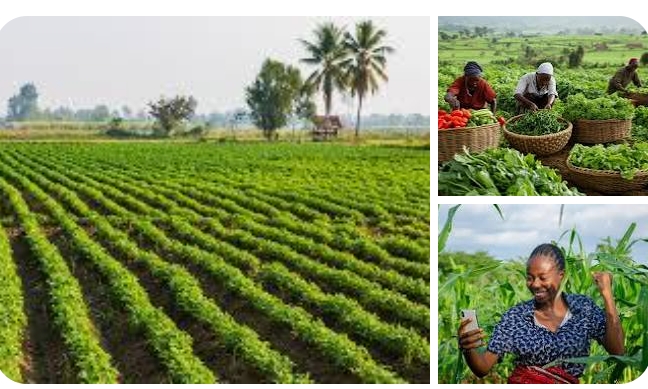
She added that farmers who accessed the loans have fully repaid them, positioning themselves for sustained business growth and improved livelihoods.
The Federal Ministry of Agriculture and Food Security, represented by Dr. Aliyu Ochonomo, reaffirmed its long-standing partnership with GIZ, noting that collaboration dates back to 1974 and has consistently supported smallholder farmers.
He said the Federal Government would continue to deepen such partnerships in line with its agricultural development priorities under the Renewed Hope agenda.
Also speaking, Kano State Commissioner for Livestock Development, represented by Dr. Abubakar Sani Inuwa, said the state recorded significant gains from the project and urged beneficiaries to apply the knowledge acquired for long-term impact.
In his remarks, Dr. Jamilu Abdullahi of the Nigerian Agricultural Extension and Research Liaison Services at Ahmadu Bello University, Zaria, disclosed that over 5,000 farmers were trained, while 22 financial products were developed to enhance access to agricultural finance.
He stressed that although the project has formally ended, its outcomes should mark the beginning of expanded opportunities in agricultural financing and enterprise development across the country.
A major boost to Nigeria’s agricultural sector has emerged from an international partnership, as a German development agency concludes an eight-year intervention that significantly expanded access to finance for smallholder farmers in the Northwest. The initiative, which emphasized commercial viability over grants, is being hailed as a model for sustainable agricultural financing and rural enterprise growth.