

By Simeon Shodimu

Efforts to address Nigeria’s food challenges have largely focused on increasing agricultural production. However, emerging perspectives suggest that a significant part of the problem may lie beyond the farm, particularly in how food is stored, handled, and preserved after harvest.
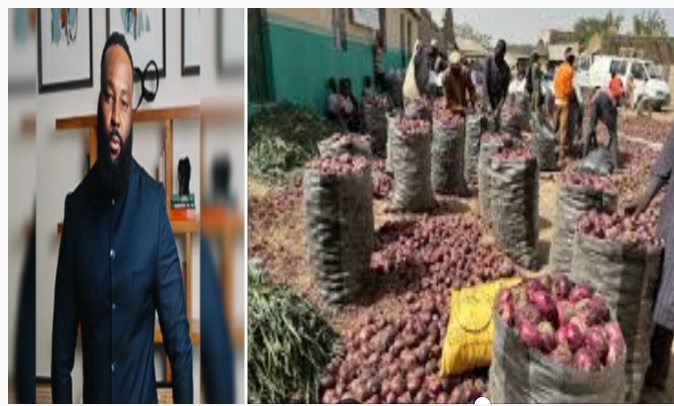
By shifting the spotlight away from farms to storage and logistics, a growing body of industry voices is challenging long-held assumptions about Nigeria’s food insecurity. At the centre of this conversation is Opeoluwa Runsewe, Founder and Chief Executive Officer of Terroso Group, who insists that the country’s food crisis is less about insufficient production and more about systemic failures in preservation.
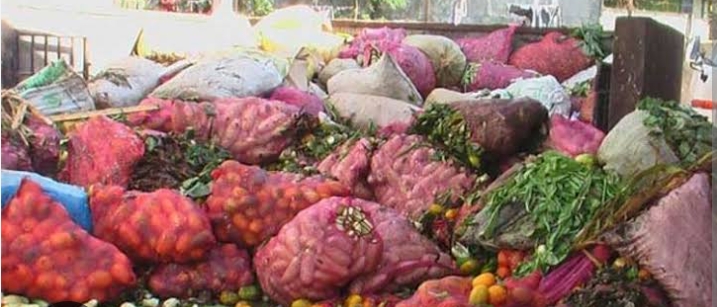
Speaking during a virtual press conference on “Post-Harvest Losses: The Business Case for Cold Chain Investment and Agro-Industrialisation,” Runsewe painted a stark picture: Nigeria loses between 30 and 50 per cent of its agricultural produce before it ever reaches consumers. The culprit, he said, is the absence of a functional, integrated cold chain system capable of preserving perishable goods from farm gate to market.

While agricultural output has recorded modest improvements in recent years, the infrastructure required to sustain these gains remains weak. According to Runsewe, this disconnect continues to undermine progress, leaving farmers, processors, and consumers trapped in a cycle of inefficiency and loss.
At the heart of the issue is the lack of temperature-controlled storage, transportation, and distribution systems. Without these, perishable goods deteriorate rapidly, forcing farmers into distress sales and eroding their income potential. For agro-processors, the consequences are equally severe: inconsistent supply, poor-quality inputs, and reduced operational efficiency.
The ripple effects extend beyond individual actors to the broader economy. High post-harvest losses shrink the volume of raw materials available for industrial processing, limiting the growth of agro-industrialisation—a key pillar of Nigeria’s economic diversification agenda. In turn, this affects job creation, export potential, and overall value addition within the agricultural sector.
Runsewe identified three core challenges: reducing wastage, maintaining quality through proper storage, and ensuring a stable, year-round supply of seasonal produce. Addressing these, he argued, requires more than isolated interventions—it demands a coordinated, system-wide approach.
Central to this transformation is investment in cold chain infrastructure. From solar-powered cold rooms to integrated packhouses and efficient logistics networks, these solutions can significantly cut losses and improve food quality. However, scaling them requires supportive policies and innovative financing.
Runsewe called on Nigeria’s financial sector to rethink its approach to agricultural infrastructure, advocating for long-term, infrastructure-grade financing models tailored to cold chain development. He also urged policymakers to introduce tax incentives, reduce import duties on critical components, and establish standardised storage regulations. A national cold chain strategy, driven through public-private partnerships, he said, is long overdue.
Beyond domestic concerns, preservation also holds the key to Nigeria’s competitiveness in global agricultural markets. Meeting international quality standards depends heavily on maintaining proper temperature control from harvest through export. Without this, rejection rates remain high, and the country forfeits valuable foreign exchange earnings.
Ultimately, Runsewe framed post-harvest loss reduction as a macroeconomic priority, with direct implications for GDP growth, inflation control, and national food security. He stressed that solving the preservation challenge could unlock significant value across the agricultural value chain.
Through Terroso Group and its subsidiary Terroso Agriculture, efforts are already underway to bridge critical gaps in cold chain infrastructure. But the scale of the problem, he noted, requires collective action.
As Nigeria seeks sustainable solutions to its food crisis, the message is becoming clearer: increasing production alone is not enough. Without preserving what is already grown, the country risks losing not just food, but the economic opportunities tied to it.