



By Lanre Shodimu

In the quiet hours before sunrise, long before markets stir to life, Nigeria’s agricultural economy is already in motion—driven by traders whose efforts sustain millions, yet whose struggles remain largely unseen by the financial systems meant to support them.
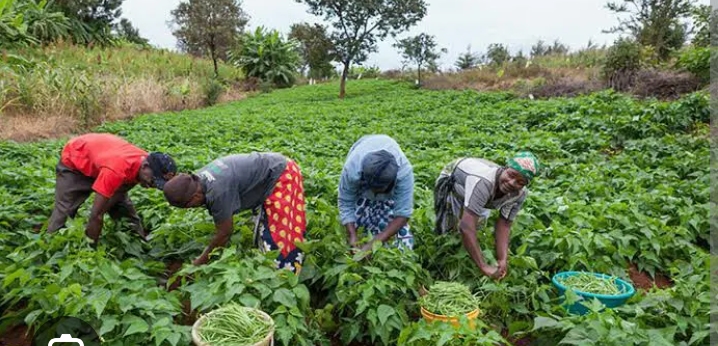
Every morning across Nigeria, a trader rises before dawn, loads a truck with cassava, cocoa, maize, or grains, and begins a journey through a complex value chain that ultimately feeds the nation. By the time these goods arrive at factories or export processing hubs, weeks may have passed. Payment, when it eventually comes, often lags by another 60 to 120 days.
This trader is not lacking in productivity or credibility. He operates with a proven track record, reliable buyers, and confirmed orders. Yet, he remains largely invisible to the financial system.
This disconnect lies at the heart of Nigeria’s agro-trading economy—a challenge far more profound than many realize.
Agriculture accounts for roughly 28 percent of Nigeria’s GDP and employs over 35 percent of its workforce. Despite this, the sector receives less than four percent of total bank credit to the private sector. The resulting financing gap, stretching into hundreds of billions of dollars, underscores a systemic failure to support one of the country’s most vital industries.

A closer look at traders, aggregators, and small-scale processors—the essential link between farms and factories—reveals an even more troubling reality. These actors form the backbone of Nigeria’s food supply chain, conducting real transactions with verifiable buyers and documented invoices. Yet, they remain “informal” not due to lack of structure, but because institutions have not evolved to recognize them.
Across Sub-Saharan Africa, approximately 83 percent of agri-SMEs lack adequate access to finance, contributing to an estimated $74 billion annual funding gap. In Nigeria, with its vast population and vibrant commodity markets, this gap represents not just a challenge, but a significant untapped opportunity.
The issue has never been a lack of demand for financing. Rather, it has been the absence of efficient infrastructure to connect that demand with capital at scale.
Recently, a notable development signaled a shift in this landscape.
The International Finance Corporation (IFC), in partnership with C2FO, the world’s largest on-demand working capital platform, launched CycleFlow in Nigeria. This initiative links MSME suppliers to major buyers and financial institutions, enabling them to convert verified invoices into immediate cash—without collateral—by leveraging the creditworthiness of their buyers.
Early adopters include major players such as Flour Mills Nigeria, MTN, and IHS Towers, with Stanbic IBTC serving as the first integrated banking partner. According to IFC projections, a fully scaled rollout could unlock between $25 billion and $30 billion in annual financing for Nigerian businesses, potentially generating over 480,000 direct jobs and several times more in indirect employment.
This is not a theoretical pilot; it is a live, operational system backed by one of the world’s most respected development finance institutions.
Yet, even as such platforms emerge, a fundamental challenge persists.
While large corporations are structured, transparent, and easy to onboard, their suppliers often remain difficult to profile. A farmer in Jigawa may lack audited financial statements. A maize trader in Kano with years of consistent delivery may have no credit history. A women-led cooperative in Nasarawa managing significant commodity flows may never have engaged with formal banking systems.
These gaps highlight the final frontier of financial inclusion—bridging the divide between sophisticated financial platforms and the informal yet highly productive actors who power Nigeria’s agricultural economy.