




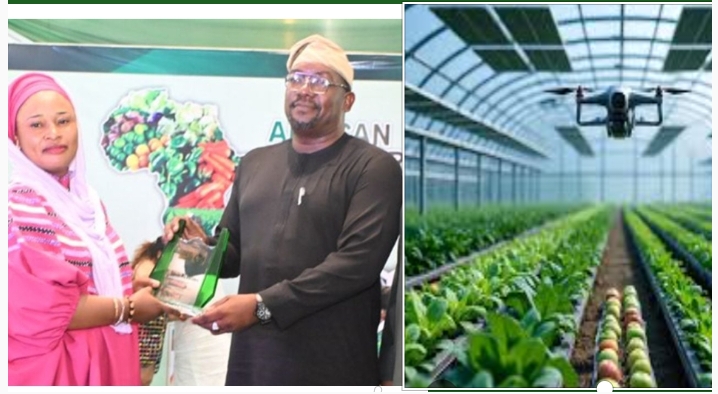
Simeon Shodimu

The evolving role of agriculture in vaccine production is drawing attention of stakeholders hence, biotechnology expert, Imole Okuntimo, has called for the integration of Nigeria’s agricultural sector with vaccine production systems, stressing that such synergy could strengthen national health security, drive innovation, and boost economic growth.
Okuntimo, in an analysis on the evolving role of agriculture in public health, highlighted the importance of the “One Health” concept—an approach that connects human, animal, and environmental health systems.
According to the expert, aligning agricultural policies with public health objectives will enable Nigeria to build a more resilient system capable of preventing and responding to disease outbreaks.

He noted that lessons from the COVID-19 pandemic have underscored the urgency of adopting integrated approaches that bridge agriculture and healthcare systems.
The expert explained that agriculture is increasingly playing a role in vaccine innovation through biotechnology, particularly with the emergence of plant-based vaccine production. This method involves genetically engineering crops to produce proteins used in vaccines, offering advantages such as lower production costs, scalability, and reduced dependence on conventional manufacturing systems.
For Nigeria, Okuntimo said investing in agricultural biotechnology presents an opportunity to develop local vaccine production capacity while leveraging the country’s vast agricultural resources.
He added that collaboration among research institutions, universities, and private sector players would be key to developing plant-based vaccine platforms, which could position Nigeria as a leader in emerging biotechnologies across Africa.
Beyond health benefits, the integration of agriculture into vaccine production could unlock significant economic opportunities.
Okuntimo noted that it would create new value chains linking farmers, researchers, and pharmaceutical manufacturers, while generating employment across agriculture, logistics, biotechnology, and healthcare sectors.
He further explained that local vaccine production would reduce reliance on imports, conserve foreign exchange, and enhance the country’s economic resilience.
However, the expert cautioned that achieving these gains would require deliberate government policies and sustained investments.
He called on the Federal Government to prioritise coordinated development of both agricultural and pharmaceutical sectors, including improved rural infrastructure, access to finance for farmers, and increased funding for research and development in agricultural biotechnology.
Okuntimo also stressed the need for stronger regulatory frameworks to ensure quality standards in both agricultural production and vaccine manufacturing.
He identified public-private partnerships as critical to driving the transformation, noting that collaboration between government agencies, private investors, research institutions, and international organisations would help mobilise resources and facilitate technology transfer.
Further to this, he emphasised the importance of capacity development through training programmes that equip professionals with skills spanning agriculture and biotechnology. Educational institutions, he said, should promote interdisciplinary studies that combine agricultural science, veterinary medicine, and biomedical research.
He further highlighted infrastructure development as a key enabler, pointing to the need for efficient transportation systems, stable power supply, and modern storage facilities to support both agricultural production and vaccine manufacturing.
Okuntimo noted that agriculture occupies a strategic position in Nigeria’s ambition to achieve self-sufficiency in vaccine production.
He urged policymakers to recognise and strengthen the link between agriculture and public health to build a more resilient system that supports both food security and national health outcomes.
He maintained that with the right mix of policies, investments, and partnerships, Nigeria could transform the intersection of agriculture and biotechnology into a major driver of scientific advancement, economic growth, and long-term public health security.