





By Lanre Shodimu

Amid growing concern in Nigeria’s farming communities, the House of Representatives has called for urgent government intervention to stabilise agricultural produce prices, warning that unchecked price crashes at the farm gate could force farmers out of business and deepen the nation’s food security crisis.
This drew the attention of House of Representatives members who called on the Federal Government to urgently introduce policies aimed at stabilising the prices of agricultural produce, following mounting complaints of severe financial losses suffered by farmers across the country.
The resolution was reached recently plenary after lawmakers unanimously adopted a motion sponsored by the member representing Ede North/Ede South/Egbedore/Ejigbo Federal Constituency of Osun State, Bamidele Salam.
Presenting the motion, Salam described agriculture as the backbone of Nigeria’s economy, underscoring its strategic importance in job creation, rural livelihoods, food security and contribution to the nation’s Gross Domestic Product.
He, however, raised serious concerns over what he termed a disturbing downward trend in farm-gate prices, particularly for staple crops and highly perishable commodities.
According to him, there has been a persistent sharp decline in the prices of farm produce nationwide, affecting commodities such as cassava, rice, yams and other staples.
The lawmaker warned that the development has already inflicted significant losses on farmers who had invested heavily in production.
He noted that many farmers committed substantial resources to seeds, fertilisers, agrochemicals, transportation and labour—investments often financed through loans and cooperative schemes—only to face severe losses due to the collapse in produce prices.
Salam linked the crisis to longstanding structural deficiencies within Nigeria’s agricultural value chain, particularly the absence of effective post-harvest systems.
He identified poor storage infrastructure, weak agro-processing capacity, lack of structured off-taking arrangements and limited market linkages as major factors worsening post-harvest losses and exposing farmers to market volatility.
According to him, if left unresolved, the falling prices could discourage agricultural investment, reduce productivity and drive many farmers away from the sector altogether.
The implications, he warned, extend beyond farmers’ incomes.
A sustained decline in farm profitability, he said, could eventually lead to food shortages, rising consumer prices and increased dependence on imports, thereby undermining national food security.
He also pointed to the nutritional consequences of disruptions in agricultural production and supply chains, warning that reduced access to affordable and nutritious food could worsen malnutrition, especially among vulnerable populations.
Following the adoption of the motion, the House urged the Federal Ministry of Agriculture and Food Security, in collaboration with relevant agencies, to immediately design and implement remedial measures.
These include the establishment of structured off-taking systems and price support mechanisms to cushion the adverse effects of the sharp fall in farm produce prices.
Lawmakers also called for stronger investment in storage and processing infrastructure, including the expansion of strategic grain reserves, cold-chain systems and agro-processing zones to reduce post-harvest losses and moderate price volatility.
In addition, the House called for the development of sustainable agricultural price stabilisation frameworks that will protect farmers’ investments, improve productivity and guarantee fair returns.
To deepen legislative oversight, the House mandated its Committee on Agricultural Production and Services to investigate the root causes of the persistent decline in farm-gate prices and report back within two weeks.
The development highlights a growing paradox in Nigeria’s food system: while urban consumers continue to face high food prices, farmers in producing communities are grappling with oversupply and depressed prices.
Recent bumper harvests of staples such as cassava, maize and yams, combined with weak aggregation and market systems, have flooded local markets and forced prices downward.
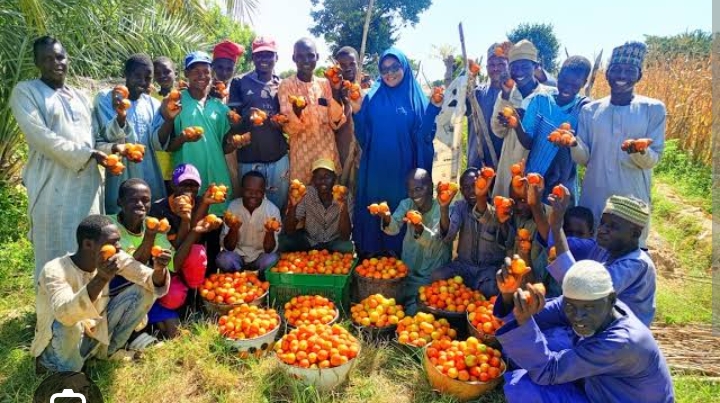
With limited access to silos, warehouses and cold storage facilities, many farmers are compelled to sell immediately after harvest to avoid spoilage, often at prices dictated by middlemen.
Poor road infrastructure and high transportation costs have further trapped produce within local supply zones, preventing farmers from reaching larger and more profitable markets.
For many smallholder farmers who depend on borrowed capital to finance each planting season, the current price slump has become a debt trap, threatening both livelihoods and future production cycles.