

By Kemi Akinseye

With global hunger figures remaining alarmingly high, stakeholders in Nigeria’s agricultural sector are intensifying calls for stronger collaboration between government, researchers, and farmers to boost food production and ensure sustainable food security.
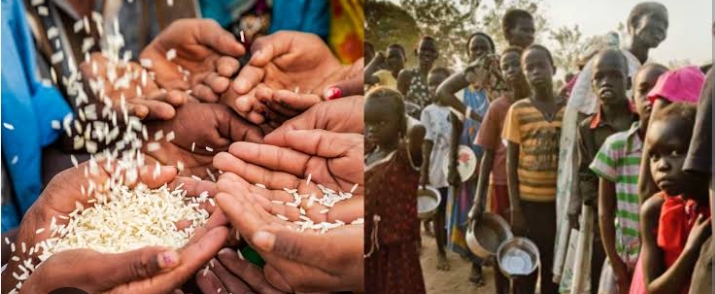
Concern is mounting over the growing number of food-insecure people worldwide, with experts warning that urgent, coordinated action is needed to reverse the trend and strengthen food systems.
The Executive Director of the Nigerian Stored Products Research Institute, Prof. Lateef Sanni, revealed that about 800 million people across the globe currently face food insecurity. He made this known during a keynote address at the 37th South West Research Extension Farmers Input Linkage System (REFILS) workshop held at the Institute of Agricultural Research and Training, Obafemi Awolowo University, Moor Plantation in Ibadan.
Represented by Dr. Mariam Bola Aremu, Sanni stressed that achieving food security would require sincere collaboration between governments and farmers, particularly in adopting research-driven innovations that can improve productivity and resilience.
He highlighted the importance of farmers embracing research outputs, especially in response to unpredictable weather patterns, noting that timely information on crop selection and planting schedules could significantly improve yields.
Also speaking at the event, Ondo State Commissioner for Agriculture, Olalekan Emmanuel Akinola, underscored the need for increased government support through mechanisation and access to modern farming technologies. He warned that misallocation of grants to non-farmers, often referred to as “political farmers,” poses a serious threat to national food security.
Akinola further urged researchers to ensure that their findings are translated into practical solutions accessible to farmers, rather than remaining confined to academic shelves.
Earlier, the Vice-Chancellor of Obafemi Awolowo University, Prof. Adebayo Simeon Bamire, emphasised that innovation must become central to Nigeria’s agricultural transformation. He called for the adoption of improved seed varieties, digital extension services, precision irrigation, and climate-smart farming practices to drive productivity.
In his remarks, former Ondo State Governor, Olusegun Mimiko, advocated stronger coordination between government and farmers to minimise post-harvest losses.

He proposed the introduction of price stabilisation mechanisms to protect farmers from losses when markets fail to absorb their produce.
Meanwhile, the General Secretary of the All Farmers Association of Nigeria, Dr. Femi Oke, pointed out that financial institutions such as the Bank of Industry and the Bank of Agriculture must be actively involved in such engagements to provide critical funding support for farmers.
Stakeholders at the workshop agreed that bridging the gap between research, policy, and practice remains essential to tackling food insecurity and ensuring sustainable agricultural growth in Nigeria and beyond.