



Jide Akinseye
Agricultural transformation through scaling up innovations no doubt is essential for development of the sector for food security .
It is on this note that stakeholders in the agricultural sector in the country have called for intensified collaboration, innovation, and large-scale deployment of proven technologies to boost food production and reduce the country’s heavy reliance on food imports.
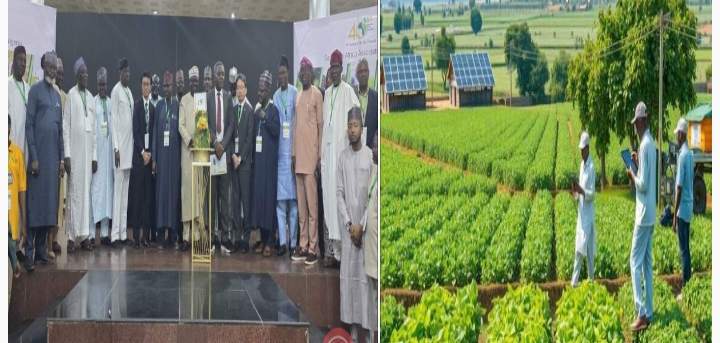
This call was made recently in Abuja at the 2026 Annual Stakeholders’ Review Workshop of the Sasakawa Africa Association (SAA), held under the theme: “SAA at 40: Deepening Impact and Expanding Reach at Scale”.
In his welcome address, the Country Director of SAA, Dr. Godwin Atser, said the annual gathering serves as a strategic platform to reflect on progress, exchange ideas, and align efforts toward transforming Africa’s agricultural sector.
He revealed that SAA over the years has deliberately selected themes that respond to emerging challenges such as climate change, soil degradation, and limited access to extension services.
Atser stated that despite ongoing reforms, Nigeria still spends about $10 billion annually on food imports, including wheat, rice, sugar, fish, and tomato paste, underscoring the urgent need to scale up local production.
He added that, bridging the gap between production and demand requires delivering appropriate technologies to farmers through effective extension and advisory systems.
He recalled that past stakeholder engagements had led to concrete outcomes, including investments in regenerative agriculture, decarbonisation practices, and digital extension services.
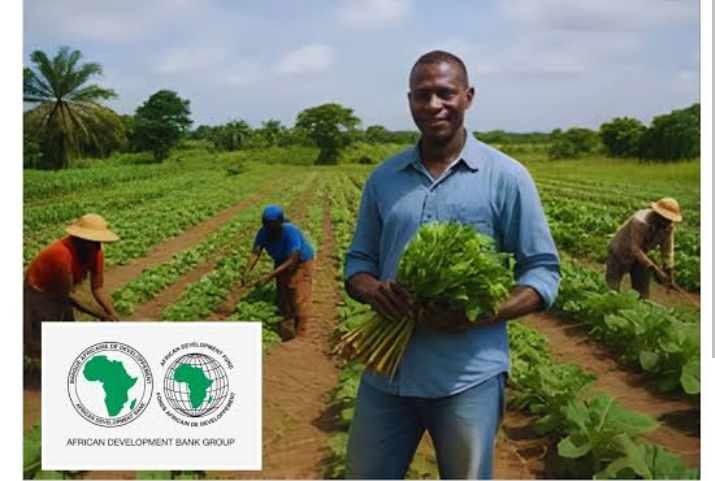
Notably, the organisation secured support from global partners such as the African Development Bank and the Gates Foundation to expand its interventions.
“As we mark 40 years globally and 34 years in Nigeria, we must not only celebrate our achievements but also confront evolving challenges such as climate variability, population growth, and shifting economic realities,” He said.
Declaring the workshop open, the Minister of State for Agriculture and Food Security, Sen. Aliyu Sabi Abdullahi, represented by Permanent Secretary Dr. Marcus Ogunbiyi, commended SAA for its decades-long contribution to improving the productivity and livelihoods of smallholder farmers.
He described the 40-year milestone as a testament to resilience, innovation, and sustained impact, noting that SAA’s interventions in climate-smart agriculture, nutrition-sensitive farming, and market-oriented production have delivered measurable results across Nigeria.
The minister emphasised that agriculture remains central to Nigeria’s economic diversification agenda and the Federal Government’s Renewed Hope Agenda, particularly in achieving food security and creating jobs for the youth.
He outlined key achievements under the Nigerian Farmers Soil Health Scheme (NFSHS), including the development of a Soil Health Card, establishment of a Nigerian Soil Information System, and partnerships with international organisations such as the World Bank, GIZ, and the Bill & Melinda Gates Foundation.
He added that modern laboratory equipment has been deployed across 12 states, while plans are underway to launch nationwide readiness assessments involving all 36 state governments.
“These milestones underscore the importance of coordinated action and shared vision in transforming the agricultural sector,” he said.
The minister also reiterated government efforts to improve farm security, expand access to inputs, mechanisation, and fertilizers, noting that these initiatives are already attracting investments and boosting agricultural productivity.
In his keynote remarks, Japan’s Ambassador to Nigeria, Shuichi Suzuki, underscored the critical role of smallholder farmers, who form the backbone of Nigeria’s food system. He observed that agriculture contributes about 25 percent to Nigeria’s GDP and employs roughly 34 percent of the labour force.
Suzuki stressed that unlocking Nigeria’s vast agricultural potential requires modernisation, improved mechanisation, reduced post-harvest losses, and stronger market linkages. He reaffirmed Japan’s commitment to supporting Nigeria’s agricultural development through technology transfer and collaboration with local farmers.
Speaking also at the event, the Chief Country Representative of the Japan International Cooperation Agency (JICA), Ishigame Keiji, highlighted ongoing interventions aimed at strengthening Nigeria’s agricultural value chain.
He noted that JICA’s support spans seed systems, market-oriented extension services, private-sector engagement, and agricultural financing. Through initiatives such as the Africa Field Innovation Centre for Agricultural Technology (AFICAT), JICA has facilitated the introduction of suitable mechanisation technologies tailored to Nigeria’s farming systems.
Keiji explained that mechanisation should not merely involve distributing equipment but should be viewed as a strategic tool for improving productivity, reducing labour burdens, and attracting youth into agriculture.
He also pointed to innovative financing models, including proposed agricultural loans to support agribusinesses and smallholder farmers, as critical to scaling agricultural transformation nationwide.
Stakeholders however maintained that while significant progress has been made, challenges such as climate change, soil degradation, limited access to finance, and post-harvest losses persist.
They emphasized the need to scale successful interventions, deepen partnerships, and leverage digital technologies to reach millions of farmers across Nigeria.
As deliberations continue, participants expressed optimism that strengthened collaboration among government, development partners, and the private sector will accelerate Nigeria’s journey toward a resilient, inclusive, and food-secure agricultural system.