




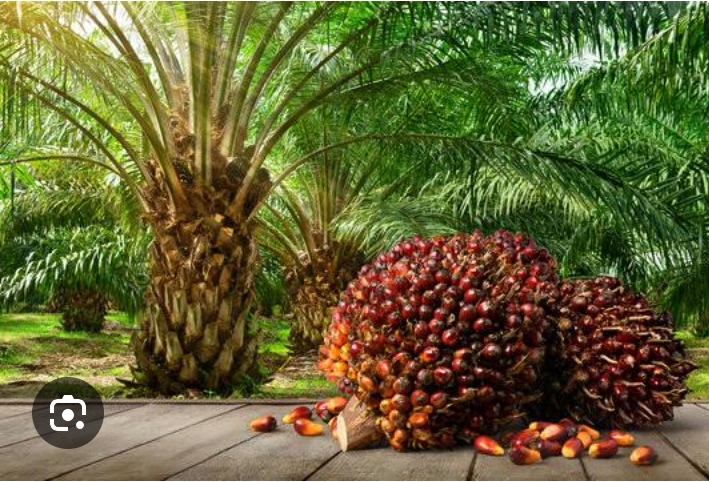
Policy summersault threatens palm oil backward integration investments

Nigeria’s push towards a game-changing backward integration policy for the palm oil industry is being threatened by policy inconsistencies in the country’s agricultural sector.
The federal government had in made a remarkable efforts in 2011 and had introduced the backward integration policy in the country palm oil sector to boost local production and refinery of crude palm oil.
Companies such as Wilmar, Dufil Prima Foods, and Agric Palm Limited among others invested heavily in developing large palm plantations while existing players like Presco and Okomu doubled their productions owing to the backward integration policy.
The country’s largest palm oil producers had their best run in year 2025, helped by higher Crude Palm Oil (CPO) prices, which rose to $1,007/metric tonnes (MT) from $923/MT, stronger domestic sales, and sustained volumes.
The combined net profit of Presco and Okomu Plc nearly doubled to N201.64 billion as revenue jumped 125 percent to N538.69 billion.
However, these billion-dollar investments and millions of jobs created are currently being threatened by cheap palm oil imports that have flooded markets.
Emmanuel Ibru, chairman, Plantation Owners Forum of Nigeria (POFON), described the situation as an existential crisis for an industry that has rebuilt itself over two decades.
“Last year, especially towards the end, we saw a proliferation of imported palm and vegetable oil coming into the country,” Ibru said.
He attributed the surge to the import waiver policy, noting that local producers are unable to compete with cheaper foreign alternatives owing to high production costs.
Billions of dollars have been invested by foreign and indigenous companies. All these investments are being threatened now by the importation of cheap palm oil,” he said.
Ibru noted that imports of crude palm oil ought to be regulated to ensure it only covers the production gaps and not exceed it.
He explained that palm oil imports should function as a strategic shock absorber rather than a permanent market feature which has been the situation in the country.
Nigeria spent a whopping $154.62 million (N215.1 billion) on importing crude palm oil in 2024, according to the most recent data from the United Nation’s comtrade.
Fatai Afolabi, managing director, Foremost Development Services Limited, said sudden market disruptions emanating from cheap imports are especially damaging, undermining investors’ confidence and discouraging new investments.
Afolabi noted that small and medium scale palm producers are squeezed between cheaper imports and high energy costs, packaging and logistics. “This threatens not only farm incomes but also rural employment and agro-industrial development,” he said.
Mohammed Tahir, chairman of the vegetable oil subsector, Manufacturers Association of Nigeria, urge the government to have a rethink on its import policies.
Tahir noted that low capacity utilisation in many factories reflects the strain on local manufacturers.
“The cost of production is very high, and factories that were operating five to ten years ago are now running far below capacity,” he said.
“When you talk of food security, it is not only about bringing food into the country. If you are not self-reliant, there is a big problem because the same crisis can rise again and we will fall back into the same trap,” he added.